
 Whatsapp
-
×
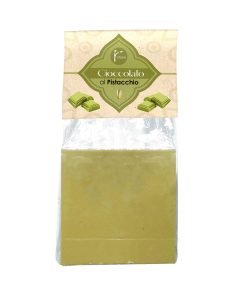 Pistachio Chocolate Bar 100g
10,46€
Pistachio Chocolate Bar 100g
10,46€ -
×
 MUSHYPIS - Pistachio Pastes 250g
12,98€
MUSHYPIS - Pistachio Pastes 250g
12,98€ -
×
VALENTINE'S DAY BOX
29,99€
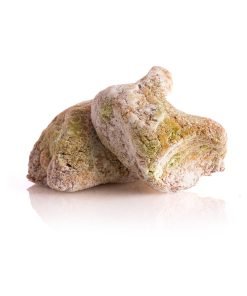 MUSHYPIS - Pistachio Pastes 250g
  VALENTINE'S DAY BOX


 Jams and marmalades
 Preserves
Uncategorized
Discovering the Bronte Etna Pistachio
14
Jun
Jun
Welcome, dear readers, to a fascinating journey into the heart of Bronte's Etna pistachio production. Today I will take you to this wonderful place, full of unique characteristics, where the famous Etna pistachio is cultivated in Bronte (CT). Together we will explore the peculiarities of this area, surrounded by the majestic lava rock, the Magma, which has cooled into stone.
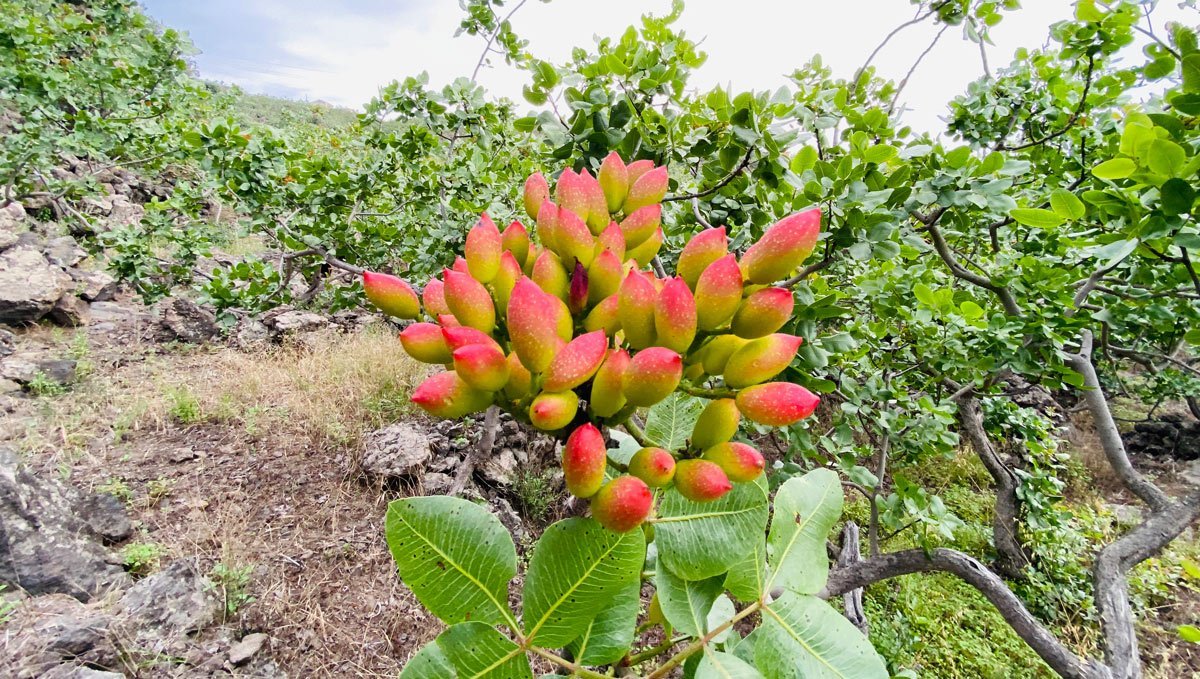
Here, at the time of year when the pistachio starts to swell, leaving the flowering phase behind, we can admire the fruits gradually growing until harvest time. At this time of year (June), the pistachios show shades of fluorescent red and green, which will turn pinkish-white during full ripening.
One of the extraordinary characteristics of the pistachio plant is its ability to grow anywhere in lava soil. Even those who are not farmers or have never picked pistachios can easily understand how complicated it is to harvest them in these conditions. The almost vertical slopes that characterise most areas of production require manual harvesting, with the use of bags or buckets hung around the neck.
Once harvested, the pistachios move on to the shelling stage. In the past, this was done manually using ceramic channels or by rubbing the pistachios on nets to remove the soft part called the “husk”. Today, fortunately, modern machines facilitate this process, making the work much easier.
After smallatura (removal of the soft “hull” part), the pistachios are gently dried in the sun, exposed in special tents or using special ovens. Is the pistachio ready to be eaten at this point? Not yet! After being shredded and dried, it must be selected and shelled and only then can it be used to make ground pistachios or to create the prized pure pistachio paste.
It is incredible to think of all the processing required for the pistachio to reach its final shape. The processing process causes the pistachio to lose weight. The soft part, the husk, is removed, as is the shell itself, which accounts for about 70% of the total weight of the pistachio.
It is important to emphasise that the Bronte pistachio is harvested every two years. This interval is necessary to avoid stressing the plants, as the annual production would be too much of a burden for them. Moreover, if one wants to create a new production by grafting a pistachio plant, it only bears fruit after 10 years. Bronte's soil, consisting mainly of lava stone, makes the cultivation environment even more fascinating.
Another curiosity is the fact that in the pistachio tree there is a distinction between male plants (scornabecco) and female plants, where the male plant can pollinate about 10 pistachio plants.
ENJOY THE FULL VIDEO

 Italiano
  English (UK)
  Deutsch